|
|||||||
 |
 |
 |
 |
 |
 |
 |
 |
 |
|||||||
|
|||||||
|
|
|
|
|
|
|
|
|
|||||||
| Compact Flash Cards
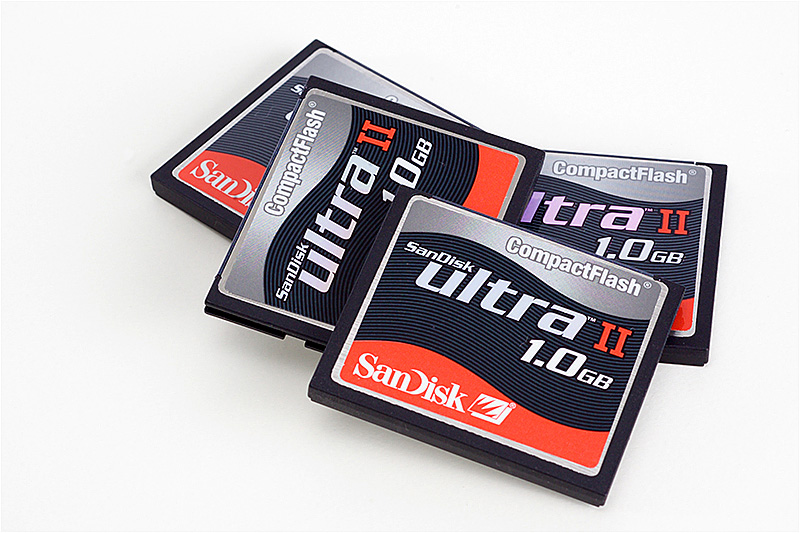
I use SanDisk Ultra II and Ultra III's. These are the fastest, most reliable cards available in the market today. Lexar is another industry leading Compact Flash (CF) card manufacturer. With either of these, we are set.
For macro photography, where shots are carefully planned and there is time between shots, this becomes less of a factor. Faster cards also allow large amounts of data to be pulled off the card and into the computer quicker (downloading). For the fastest data extraction times, use a Firewire (IEEE 1394) reader. Although high-speed USB specifications seem to exceed Firewire, Firewire readers transfer data significantly faster than USB devices. This has to do with the sustained transfer rates and the transfer protocol. Hi-Speed USB has a faster peak rate, but it sustains lower overall transfer rates. My SanDisk CF reader pulls data from my cards at 10MB/sec, while my SanDisk High-Speed USB reader pulls data at 2MB/sec. That is a 5x speed difference. This means that I can download a full 1GB card in a few minutes. With my USB reader, it would take considerably longer. A clarification on USB - there is essentially no difference between the speed of a USB 1.1 (or 1.0) and a USB 2.0 Full-Speed device. "Full-Speed" simply means that it is able to transfer data at the full USB 1.1 specification, which is to say, it is slow. USB 2.0 "High-Speed" devices are the ones able to transfer data faster. They require USB 2.0 High-Speed compliance through the entire link: The device -> hub -> I/O interface port. Rob Galbraith's CF Card Performance Database
If we are shooting weddings or similar once-in-a-lifetime events, we would want our data to be there when we go to pull it off the card, and in the same state as when it was originally written. It would, therefore, be prudent to use a reliable card. If we are just shooting macros of our corals, once again, this becomes a moot point. It is more of a headache than a heartache.
1GB is a happy compromise, allowing storage of enough photos to get through many shots without having to swap cards, yet not allowing us to put all of our eggs in one basket. A side advantage with the higher capacity cards being released is 1GB card prices are dropping.
When a format or an erasure occurs, the computer (camera) simply moves the End Of File (EOF) marker to the beginning of the file so it has a zero length and contains no data. The data is still there and untouched until another photo is taken and new data is written over it. Think of it as a book with a table of contents. Initially the book is blank. Over time we fill it with words and add a table of contents so we know where each chapter is. If we erase the page numbers in the table of contents, we no longer know where the chapters are, but the words are still there until we write new stuff on top. Data recovery tools are available to reset this flag and recover 100% of the erased data. Some products allow for free trials. They all work on the same principle, and if the shoot was important, the cost of data recovery becomes insignificant in light of recovering priceless photos. PhotoRescue workflow and download
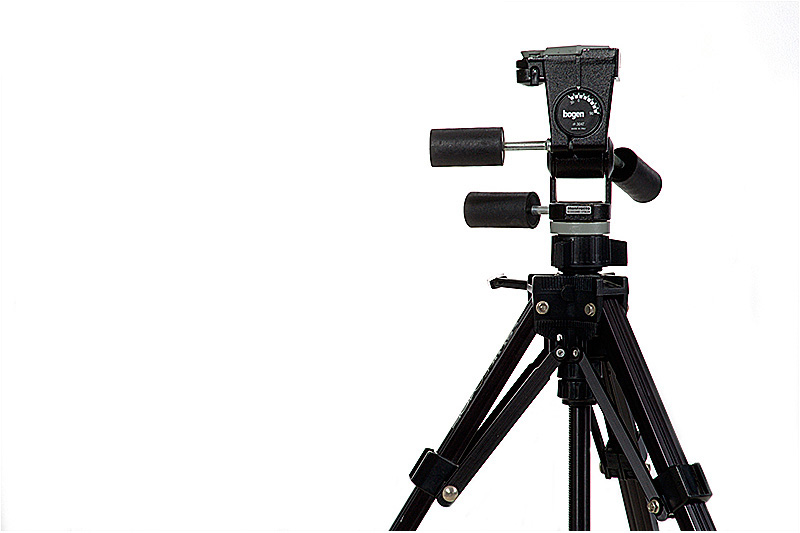
The tripod I use is a Silk 504QF with a Bogen 3047 (Manfrotto 029) head. The bottom part is referred to as the legs the top part, the head. Having three legs makes it a tripod. Monopods, single-legged versions, are also available. The head is the part that moves and swivels, and allows for attachment of the camera. Tripod mounting screws are standardized, and almost any camera can be easily mounted to just about every tripod on the market. There are several types of heads. The one pictured is the most sturdy, but requires several adjustments to adjust and aim. Ball-heads allow for quick single-handed adjustments and are small and lightweight. They do, however, sometimes get caught up with dirt and dust that prevents it from moving smoothly. If this happens, a good cleaning will get it running smoothly again. Some good ball-head manufacturers include Arca-Swiss, Kirk, and Markins. Legs also come in many variants. Most feet are rubberized and some include spikes for added grippage on slippery surfaces (not recommended for waxed hardwood floors). Additionally, carbon fiber tripods are strong, sturdy, yet lightweight. These, however, cost a premium. A couple of good tripod manufacturers include Gitzo and Bogen/Manfrotto.
|
|
|
|